


New on the blog.
When a machine can write a clean answer in seconds, what happens to the thinking that used to produce it? A recent piece in Times Higher Education named the symptom well: work that looks sharp on the surface and stands on nothing underneath. The polish is real. The reasoning is rented.
Inside: the shift from prompt and answer to a real reasoning loop, and seven ways to keep the thinking in the loop whether you teach, manage, or just want to keep your edge.
Read it here: https://www.harvestkernel.com/thinking-is-the-point-ai-without-outsourcing-judgment/

OpenAI shipped GPT-5.6 on July 9, three models named Sol, Terra, and Luna, plus an agent called ChatGPT Work that can run a project for hours and hand back a finished artifact. The launch-day reflex is to drop everything and go learn it.
Here is the contrarian take I keep coming back to. The educators who win the next five years will not be the ones who learned GPT-5.6 fastest. They will be the ones who already knew how to direct any model, judge its output, and decide when to use it. That fluency does not expire. The model does.
I called the trap the Tool Treadmill in today's post: every release resets the race, so you feel busy and behind at the same time. The way off it is building transferable skill, not chasing interfaces.
Your turn: When a big model drops, what is your honest first move, dig into the new features, or wait and watch? And has chasing a shiny tool ever actually paid off for you in the classroom or your work? Tell me where you land.
Dive deeper in today's post: GPT-5.6 Landed. Chasing It Is the Trap. → https://www.harvestkernel.com/gpt-56-chatgpt-work-fluency-not-tool-chasing/
New on the blog: Keeping Kids Safe From AI
MIT researchers built a lawful way to catch AI models rebuilt to make illegal images of children, and the clever part is what it refuses to do. It never generates the content. It reads the model from the inside.

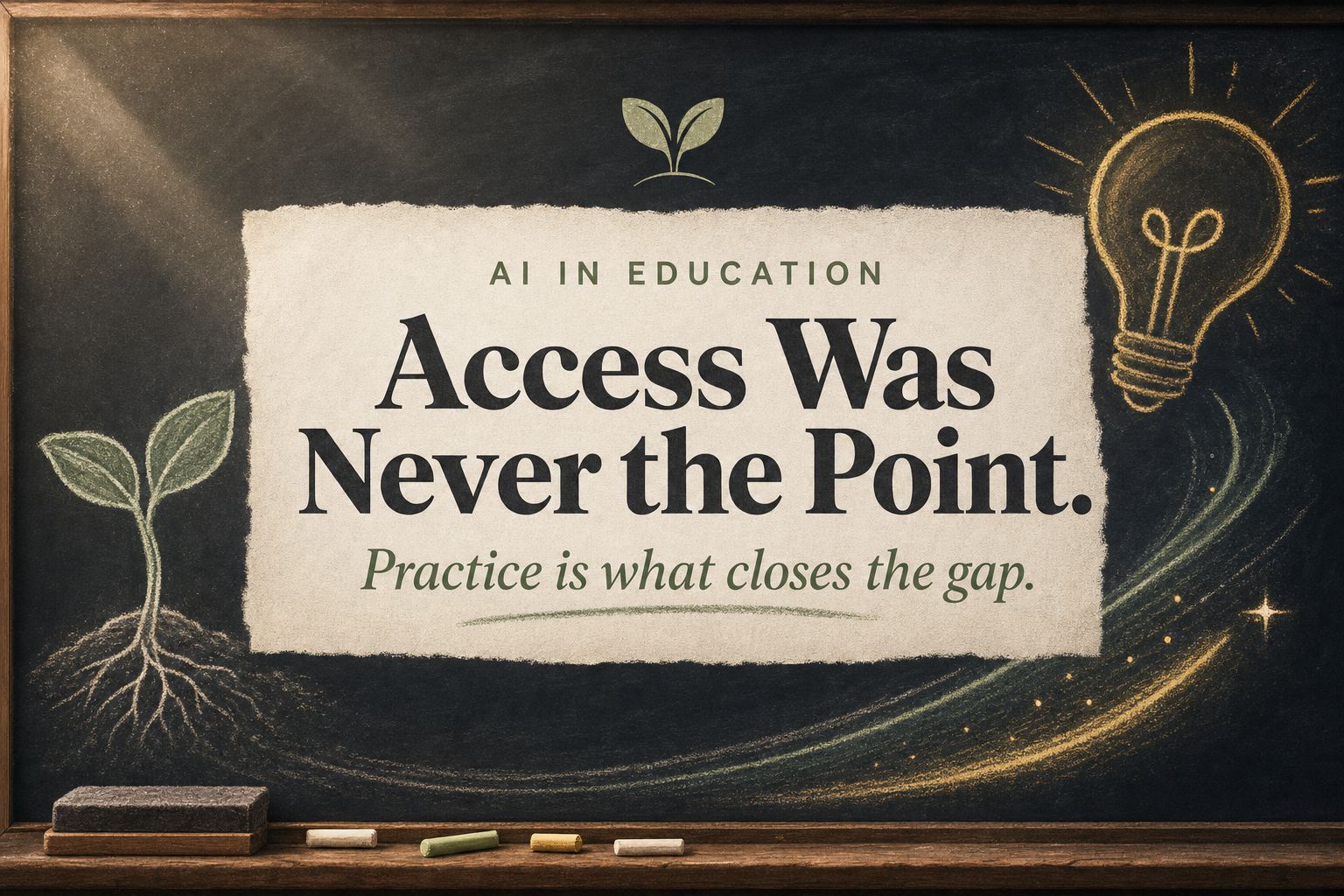
OpenAI gives ChatGPT away free. This month it is spending real money to put human mentors in rooms with 1,600 teachers across eight cities. Read that combination again: the company with infinite free access decided access was not the bottleneck.
The Walton Family Foundation and Gallup found teachers who use AI weekly reclaim 5.9 hours a week, about six weeks a year. The word doing the work in that sentence is weekly. The savings belong to people who practice on real tasks, not to people who hold licenses.
Here is the seed worth planting: the format of those workshops is not proprietary. One real task, one colleague twenty hours ahead of you, one finished win before the room empties, repeated monthly. Any grade level team can run it during a planning period.
So tell me about your building: what is the one real task you would bring to a skills jam this month, and who is the colleague you would want narrating their screen for the first five minutes? I am collecting the answers, because the patterns across schools are worth a follow up post.
Dive deeper in today's blog post: 1,600 Teachers Just Got AI Mentors. Access Was Never the Point. → https://www.harvestkernel.com/openai-teacher-ai-training-skills-jam/
Companies swapped salaries for AI tokens, and the returns basically never showed up. Gartner looked at 350 companies pulling over a billion in revenue. Roughly eight in ten had cut headcount, and the cuts had zero correlation with better returns. The ones who actually moved the needle used AI to make their people sharper instead of showing them the door.
I unpack why the trade breaks, and the one variable that turns AI spend into real results.
Read it: https://www.harvestkernel.com/token-for-talent-trade-ai-returns-fluency/

The Verge ran a story this weekend that stopped me cold. Some of the wealthiest families in the country are pulling their kids out of traditional schools and paying up to $55,000 a year for schools where an AI tutor does the teaching and a human "guide" handles the rest. Silicon Valley venture capitalists are first in line.
Here is what got me. The same families who have the most inside knowledge about how AI actually works are betting their own children on it, while the rest of us get told to slow down and be careful. That is a signal worth reading.
But when you take the model apart, the expensive part is not the technology. A learning scientist at Northwestern looked at one of these schools and could not even bring herself to call it an AI school. It is personalized pacing, daily hands on practice, and an adult keeping judgment in the loop. Every one of those ingredients is already sitting in a free browser tab in your house tonight. Six in ten teachers used an AI tool last school year. The tools are everywhere. The fluency is not.
So I want to hear from you. What is the biggest barrier you have hit when trying to build real AI skill, for yourself or your students? Is it time, confidence, knowing what to practice, or something else? I have a hunch we are all running into the same wall, and I want to see if the pattern holds.
Dive deeper in today's post: The Rich Are Buying AI Schools. Fluency Is Not for Sale. -> https://www.harvestkernel.com/ai-schools-wealthy-tuition-trap/

This week 150 educators and hiring leaders sat down at Google in New York to shape how AI lands in classrooms. The recap line worth keeping: innovation has to happen with schools, not around them.
The part nobody puts in the press release is how a regular educator gets that seat. You get it by being fluent enough to hold one. Nobody invites the person who needs the tool explained to them to help design the tool.
Today's post breaks down the Human Skills Dividend, the guardrails the room agreed on, and the four SeedStacking moves that turn one week of small reps into a voice at your school's AI table.
Read it here: https://www.harvestkernel.com/nyc-ai-summit-educators-hold-the-pen/
New on the blog. Everybody is saying agentic AI. Almost nobody stops to say what it actually means, so we did.
Agentic AI is not magic and it is not a threat. It is a very capable set of hands. The skill is not using agents, it is staying in the driver's seat: define the goal and the guardrails, keep a human checkpoint on anything that spends money or cannot be undone, and verify the output against reality.
Read it here: https://www.harvestkernel.com/agentic-ai-without-the-hype-driver-seat/
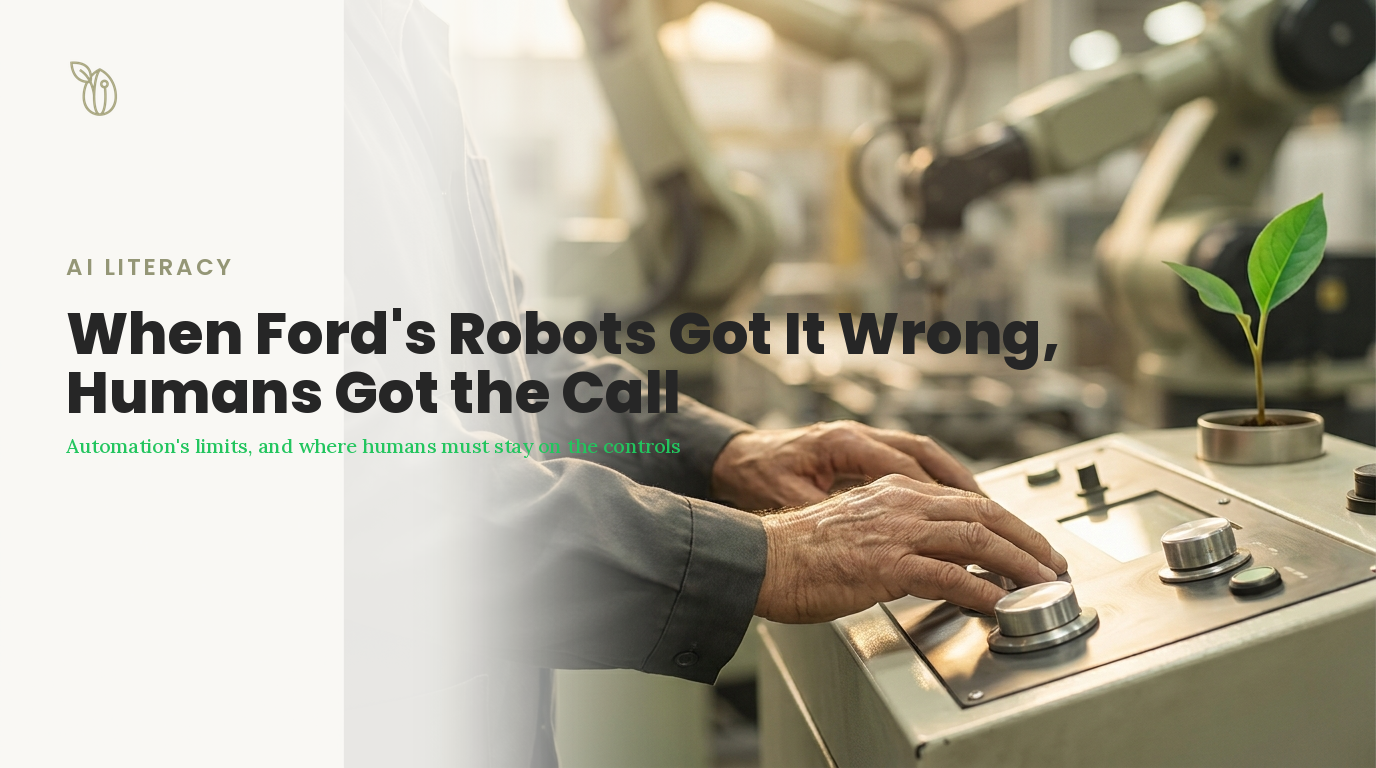
Ford just hit number one in JD Power quality for the first time since 2010. The twist: it got there by rehiring more than 350 veteran engineers to fix what its automated systems got wrong. Today's post names the failure mode (the Oversight Gap) and gives you a four question framework for where to keep a human on the controls. Read it here: https://www.harvestkernel.com/ford-automation-oversight-gap-ai-literacy/
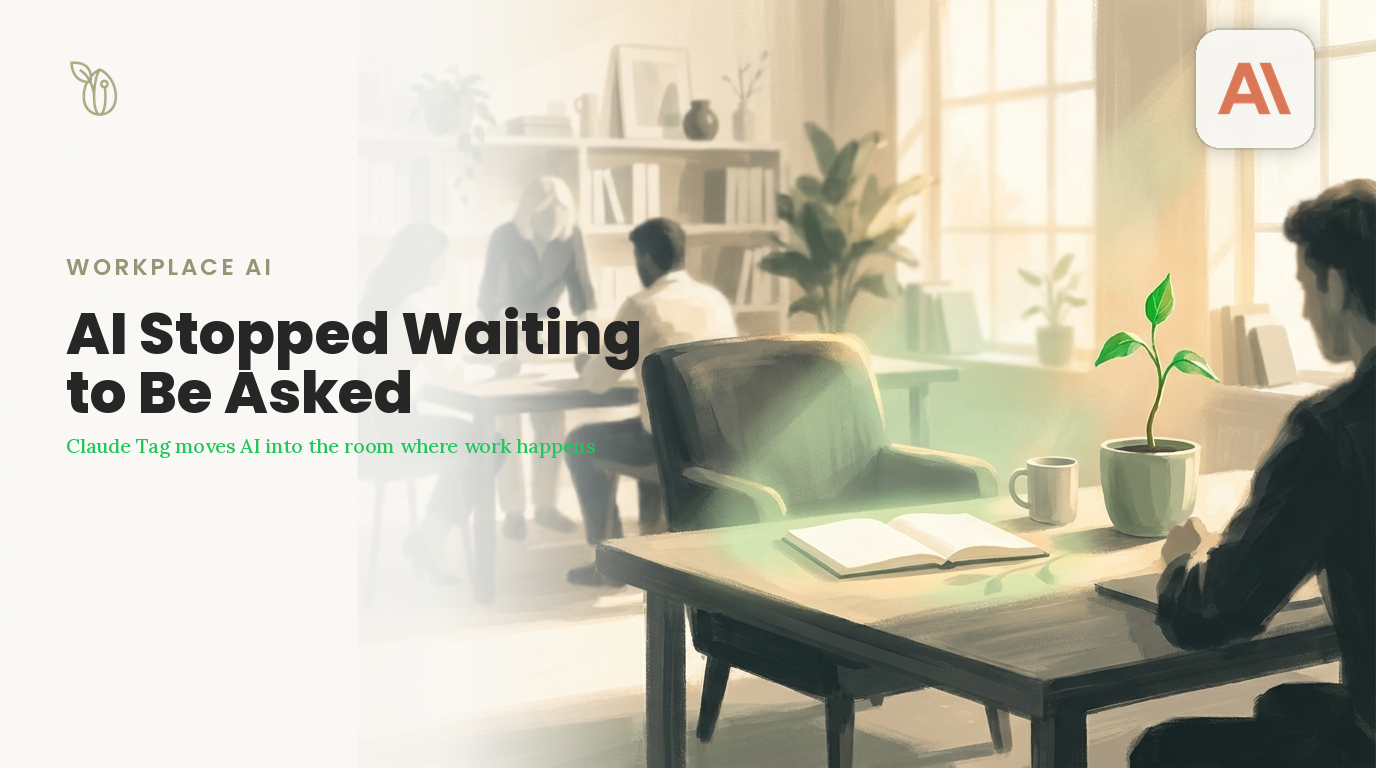 New on the blog. Anthropic just launched Claude Tag, an AI agent that lives inside Slack and acts on its own. It does not wait to be asked. It watches the channel, flags what matters, and follows up on threads that went quiet.
Here is the part worth sitting with. When AI waited in a tab, the skill was prompting. Now that it lives in the room, the skill is delegation. Knowing what to hand off, how to frame it, and when to check the work.
The good news is you can build that skill today, on the free tools already on your phone, one small SeedStack at a time.
Read it here: https://www.harvestkernel.com/claude-tag-ai-teammate-slack-fluency/