


We spent three years debating whether students should use AI on their assignments. Entire conferences built around one word: integrity.
During that time, almost nobody asked the same question about teachers.
New research from Education Week reveals the blind spot: teacher evaluation portfolios used for licensing, certification, and career advancement have zero AI-use policies. EdTPA encourages AI for planning. National Board Certification requires reflective portfolios. And detection software has virtually no evidence base for teacher professional writing.
The fix is not banning AI from teacher portfolios. It is evaluating the process, not just the product.
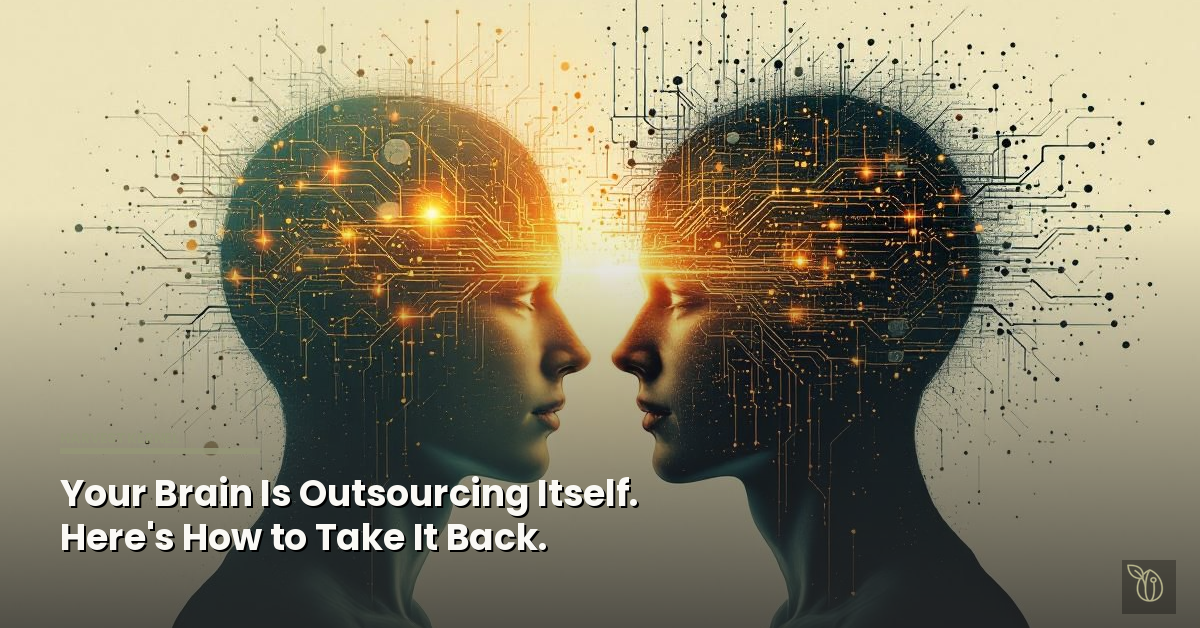
New on the blog: Your Brain Is Outsourcing Itself. Here's How to Take It Back.
Time Magazine just published a deep investigation into how AI is reshaping the way we think. Researchers at UPenn have coined a new term for what happens when you stop evaluating AI's output: cognitive surrender. And a 912 student study across three continents found something nobody expected.
The learners who used AI the most also questioned it the most. And that combination produced the deepest learning of any group in the study.
The question is not whether to use AI. It is whether you are building a partnership or creating a dependency.
ASU just quietly launched an AI platform that scrapes faculty lectures and sells them as $5/month learning modules. The professors whose content was used? Nobody told them.

This week on the blog, we break down what happened, why it matters, and what it reveals about the difference between AI that extracts educator expertise and AI that empowers it.
New on the blog: The AI-Proof Major Doesn't Exist. Here's What Does.
Students across the country are switching majors, searching for degrees that will keep them safe from AI. Business analytics to marketing. Data science to studio art. Computer science to... anything that feels more "human."
The data tells a different story. The gap forming in the workforce isn't between safe and unsafe majors. It's between people building AI fluency and people avoiding it. Workers with AI skills command a 56% wage premium. Organizations with structured AI upskilling see nearly 2x the return on AI investments.
The career protection everyone is searching for isn't a degree. It's a daily practice.

There's a pattern I keep seeing in every faculty workshop I run. Educators show up excited about AI. They leave with a faster version of the same lesson.
The problem isn't the tool. It's the question they're starting with. "How can I use AI?" feels right, but it skips the most important step: deciding what better learning actually looks like.
I wrote about three specific practices that shift the approach from efficiency to transformation. The first one alone changed how I design every lesson.
What question do you ask yourself BEFORE you open an AI tool? I'm genuinely curious whether other educators have a mental checklist or just dive in.
New on the blog: AI Literacy Is Economic Insurance: What 81,000 People Just Told Anthropic
Anthropic just dropped the largest qualitative AI study ever conducted. 81,000 people across 159 countries talking about what they hope AI will do and what they fear it will take from them. The pattern hiding in the data is not about AI itself. It is about who builds fluency with it and who does not.
The workers most anxious about displacement are the ones with the highest exposure. The workers reporting the biggest productivity gains are split between the highest paid and some of the lowest paid. The middle is where the anxiety lives. Early career workers benefit at a 20 point lower rate than senior professionals. The divide is not age or industry. It is literacy.
Read the full breakdown: https://www.harvestkernel.com/ai-literacy-economic-insurance-anthropic-81k-study/
What part of this data lands hardest for you? I am curious which finding shifts how you think about your own AI practice.
New on the blog:
Every Community College Just Got Free AI Training. Here's What That Actually Means.
Microsoft and NAAIC just expanded free AI training to every community college in the country. A professor's honest take on the opportunity, the catch, and what faculty should actually do with it this semester.
Microsoft and NAAIC just handed every community college in the country free AI curriculum, faculty bootcamps, GitHub Copilot Pro, and LinkedIn labor-market data. I wrote about what faculty should actually do with it this week, based on where I am at MATC.
Quick question for the room: If your institution is one of the 337 already in NAAIC, what has the rollout looked like on the ground? And if you are not in yet, what is the blocker? Admin buy-in, faculty bandwidth, something else?
New post up today. The NEA just published a piece on aspiring educators and AI that most of the edtech commentary is missing.
Two future teachers, same generation, totally different takes. One sees AI as an equity tool for multilingual learners. The other watched ChatGPT fabricate half a list of court cases and never trusted it again.
Both are right. The fact that they are both right is the problem nobody is naming.
The real divide is not pro-AI versus anti-AI. It is between future teachers who have been taught a framework for using AI and future teachers who are figuring it out alone on a Tuesday night.
Read the full breakdown: https://www.harvestkernel.com/aspiring-educators-ai-preservice-training-nea/
Question for the community: if you are in a pre-service program right now, or you have hired a new teacher recently, what did their AI training actually look like? Was it part of the curriculum, or did they pick it up on their own?

Jack Clark, cofounder of Anthropic, majored in English literature. He is now one of the most influential voices in AI policy. At Semafor's World Economy Summit this week he told young people the most AI-useful education is synthesis across disciplines and learning to ask better questions.
That is literally SeedStacking in his words.
The piece unpacks what Clark actually said, why it lands differently coming from him, and what the four-part reorientation looks like if you are a student choosing a major, a working adult retraining, or a parent trying to give good advice right now.
Read the full post: https://www.harvestkernel.com/anthropic-cofounder-advice-what-to-study-college-ai-era/
Curious what you think: is Clark right that rote programming is a losing bet, or is this an insider underselling the case for technical fundamentals?

What happens when professors stop fighting AI and start building with it?
A Washington Post feature highlights a growing movement: faculty members who are designing custom AI tools that challenge students to think harder, not faster. At the center is CAiSEY, a voice-powered AI discussion partner used by 3,000+ students at Columbia, UC Berkeley, UPenn, and UVA.
The twist? It refuses to give answers. It argues. It pushes back. It forces students to defend their reasoning out loud.
And students who use it arrive to class more prepared, more confident, and more willing to engage with perspectives they disagree with.
Read the full breakdown: https://www.harvestkernel.com/ai-tools-that-make-students-think-more/
The question this raises for all of us: Are you using AI to think less, or to think better?